
Customer Story
JC Print Farm · jcprintfarm.com
How JC Print Farm Scaled to 100 Printers
Smart queuing, fleet API, and automated build plate optimization helped JT triple his fleet without raising prices or turning work away.
| Before | After Printago | |
|---|---|---|
| Daily build plate prep | 3–4 hours | Under 30 seconds |
| Slicing labor at 100 printers | ~40 hrs/week | Eliminated |
| Growth ceiling | Stuck at 30 printers | Scaled to 100 |
The Challenge
Managing 30 printers was already unsustainable. Every day, the team spent 3–4 hours manually optimizing build plates, preparing printers, and loading filament. A part-time intern dedicated their entire working hours just to slicing files.
Scaling further wasn't a matter of ambition. It was a question of feasibility. The team faced a hard choice: raise prices, stop accepting new work, or find a better way.
The Turning Point
Printago didn't just make the existing workflow faster. It changed the way the team thinks about their operation entirely.
“If it wasn't for Printago, we would not have had the confidence to get to more than 30 printers. That was already too much work every day. We would have had to either raise prices, or stop accepting new work.”
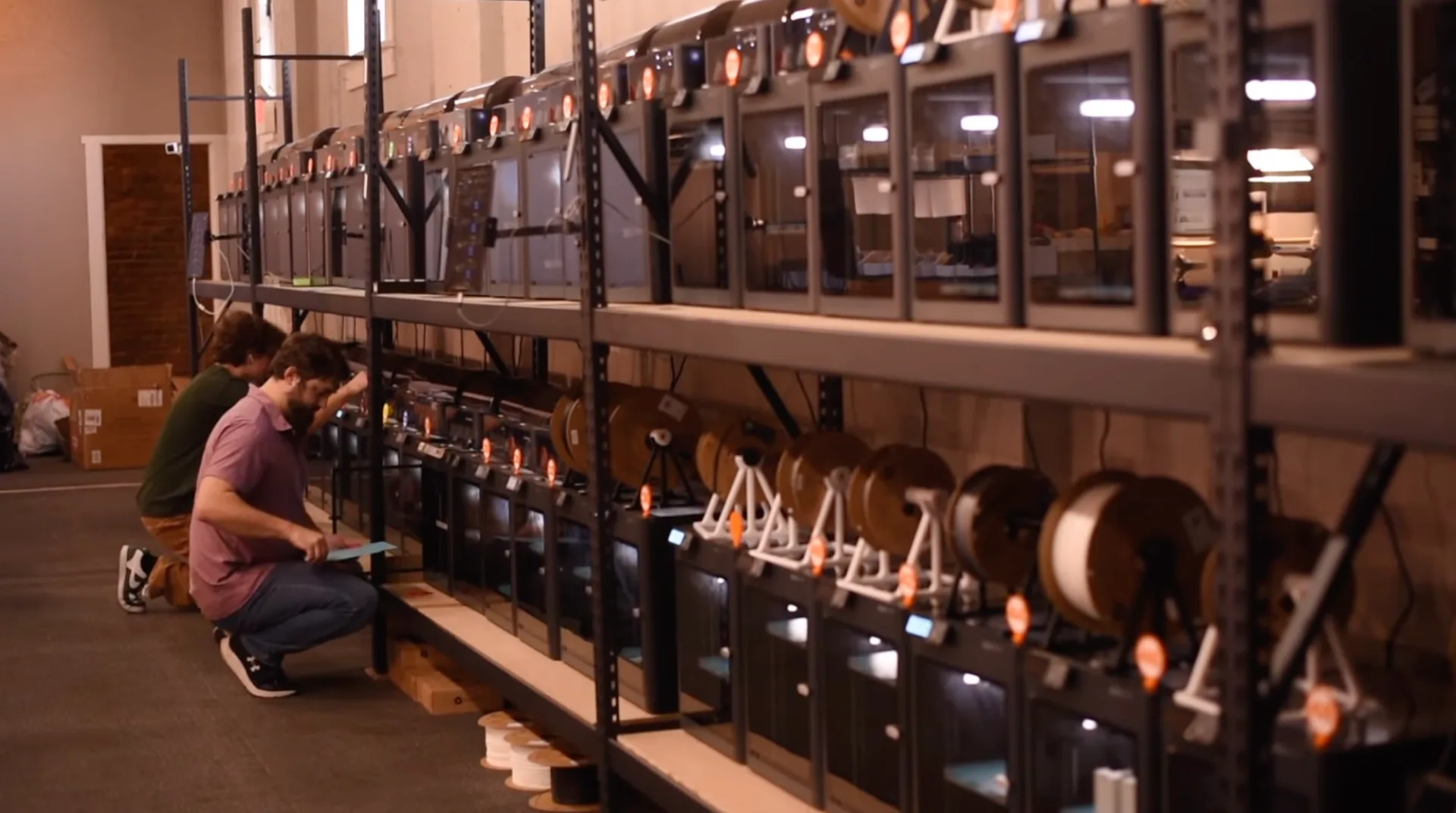
“We no longer stuff build plates and instead can focus on optimizing printers that are ready to take jobs. We look at the print farm not as a farm, but as a single machine that can process many jobs at once.”
Results
- Build plate prep reduced from 3–4 hours per day to under 30 seconds, and now runs continuously
- Slicing fully automated the moment an order comes in: what required a dedicated part-time role at 100 printers now takes less than 30 seconds
- Grew from 30 to 100 printers without raising prices or turning away work
- The team now actively seeks out new work and expansion opportunities, confident their systems can keep pace
Favorite Features
The tools that made it possible
Fleet API access
“My favorite feature by far is the API access to control the fleet. We can easily write custom integrations for our workflows without having to understand the deep printer firmware code to be able to manage them.”
The API gives operators full programmatic control over their fleet, enabling custom integrations tailored to their specific workflows, without needing deep hardware expertise.
Smart queue
“The smart queue is the single best feature to have and plays a vital role every day in how we operate smoothly.”
Printago's intelligent job queue continuously matches incoming orders to available printers, keeping machines running and eliminating the manual coordination that used to consume hours each day.
Automated build plate optimization
What previously required 3–4 hours of daily manual work now happens in under 30 seconds, running continuously in the background as orders come in.
Scales with you
“Printago has everything you need to get a single printer automated, and it will scale with you to help your systems at hundreds of printers.”
From one printer to one hundred, the same tools carry the operation forward: no re-platforming, no rip-and-replace.
The Bottom Line
At 100 printers, slicing alone would be a full-time 40-hour-per-week job without Printago. Now it's fully automated: each order is sliced and queued the moment it arrives, with zero manual work.
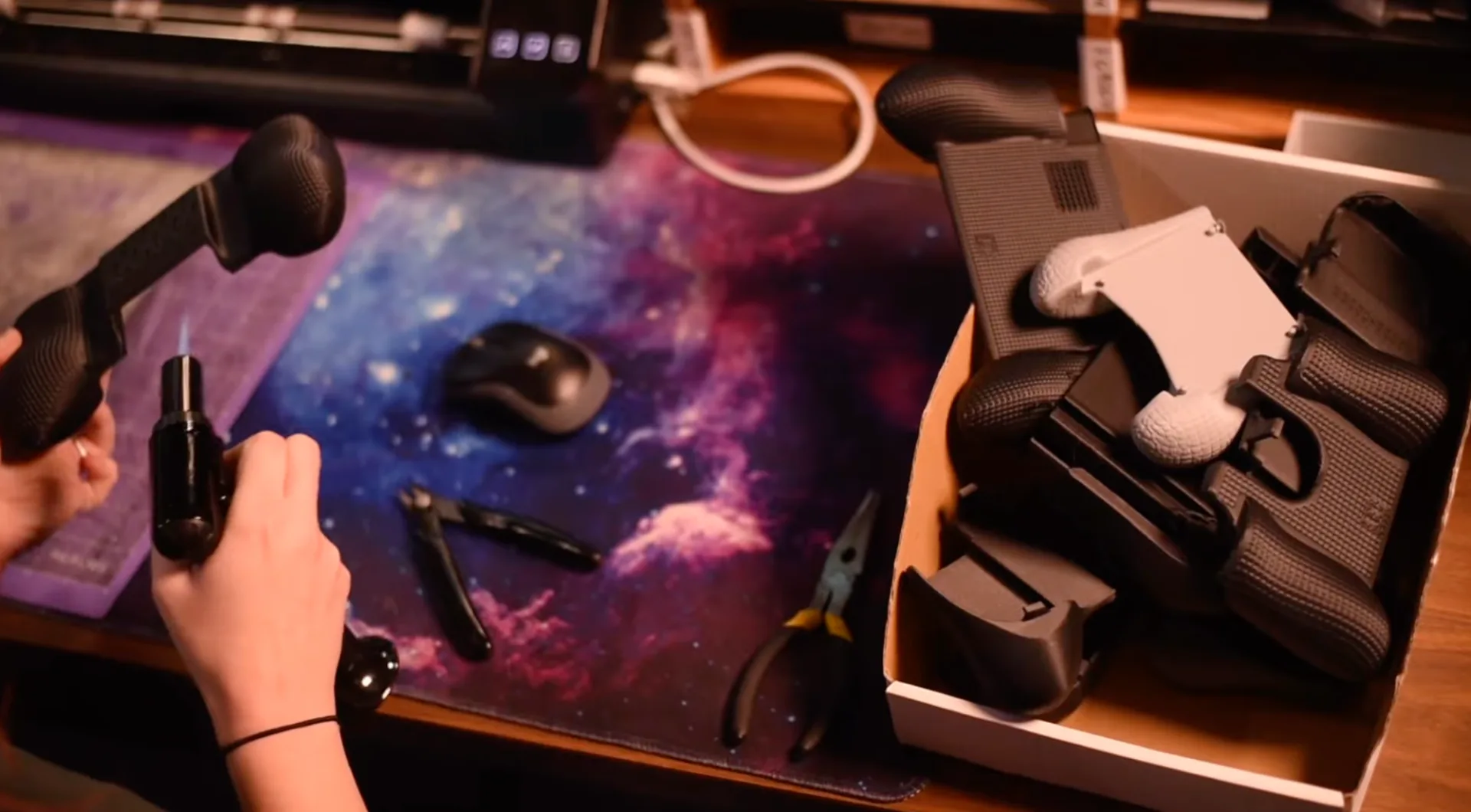
Inside the JC Print Farm operation.
JT operates JC Print Farm, a commercial 3D print farm that scaled from 30 to 100 printers with Printago.
Published April 14, 2026
Sign up for free today
No credit card required. Connect unlimited printers and get production automation running in minutes.